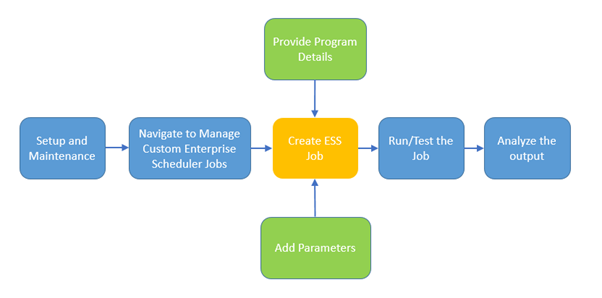
OIC Schedule REST API “startDate” Gotcha and What Works Instead A practical troubleshooting note for Oracle Integration schedule automation Executive summary When automating Oracle Integration Cloud (OIC) scheduled integrations via REST, you would typically expect the start timestamp to accept ISO 8601. However, multiple practitioners have observed HTTP 500 errors…
How to access Oracle Fusion GL Account Hierarchies with REST API
Accessing Oracle Fusion GL Account Hierarchies with REST API Overview In Oracle Fusion Cloud Financials, General Ledger (GL) account hierarchies are implemented using the Trees framework. An account hierarchy is a Tree defined under a Tree Structure and can have multiple date-effective versions. The most practical REST approach for reading…
Building Custom AI Bots in Oracle ERP Cloud: Lessons from a Proof of Concept
From RAG-based user guidance to API-driven financial copilots and AI-powered automations Executive summary In a recent proof of concept (PoC), we explored how to create custom AI bots that sit alongside Oracle ERP Cloud to help end users find guidance, retrieve transactional insights, and automate high-volume finance processes. The PoC…
How to Bulk Upload Oracle Fusion Lookup Codes with Context-Based DFF Values
If you’ve tried to bulk-load Lookup Codes in Oracle Fusion and also populate context-based Descriptive Flexfield (DFF) values, you may have seen errors like: This post explains why those errors occur and provides a repeatable, practical method to load lookup codes with a DFF context and segment values correctly. The…
Taming SLA – Mapping Set Explosion cured by user-defined functions
Why this matters Most SLA implementations start with Mapping Sets because they’re easy to explain: ‘If attribute X = Y, return segment Z.’ But when Natural Account derivation depends on multiple conditions, Mapping Sets can grow into hundreds or thousands of rows—hard to maintain, risky to change, and painful to…
Identifying Approvers in Oracle Fusion – What SQL Can and Cannot Tell You
Approvals are where business controls, compliance, and user experience intersect. When a change request, purchase, or HR action stalls, knowing exactly who it has now, who already acted, and why it failed is critical for unblocking the process, meeting SLAs, and proving auditability. In Fusion Apps, that trail is split…
Mining Average Daily Balances (ADB) from Oracle ERP Cloud
• If you’ve enabled Average Daily Balances (ADB), daily data is stored in GL_DAILY_BALANCES (one row per period with day buckets) and made report-friendly by GL_DAILY_BALANCES_V (one row per GL date). • For functional/entered balances (currency types U/E/C), End-of-Day (EOD) is derived from period aggregates; the physical END_OF_DAY# columns are…
Pause/Resume OIC Integrations as per Oracle Fusion Patch Cycle
1. Summary Lot of times we have a need to pause all OIC integrations, primarily for ex. when there are scheduled downtimes. Below is a tentative, production‑ready solution design for managing pause and resume of scheduled integrations in Oracle Integration Cloud (OIC). In this solution, integration state is persisted in…
How to set up payment approval in Oracle Fusion.
Payment approval allows management to control payments by prioritizing available funds. You can send payments to approvers for review before final payments are made to suppliers or employees. If enabled, the payment process stops at the Review Proposed Payments stage. Approvers can then optionally remove payments directly from a payment…
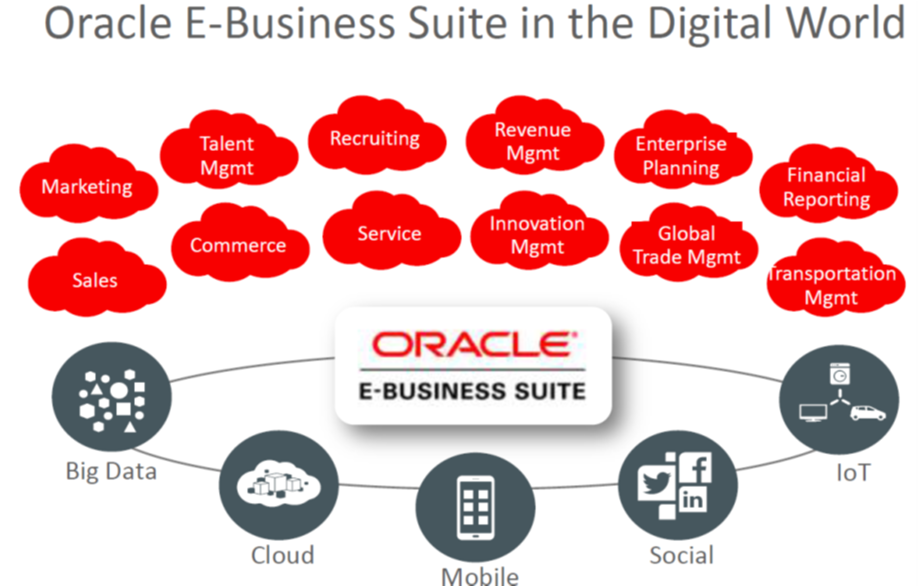
12.2 OEBS in Oracle Managed Cloud

In this post we look at how we can install Oracle E-business Suite instance in an Oracle IaaS Cloud.